
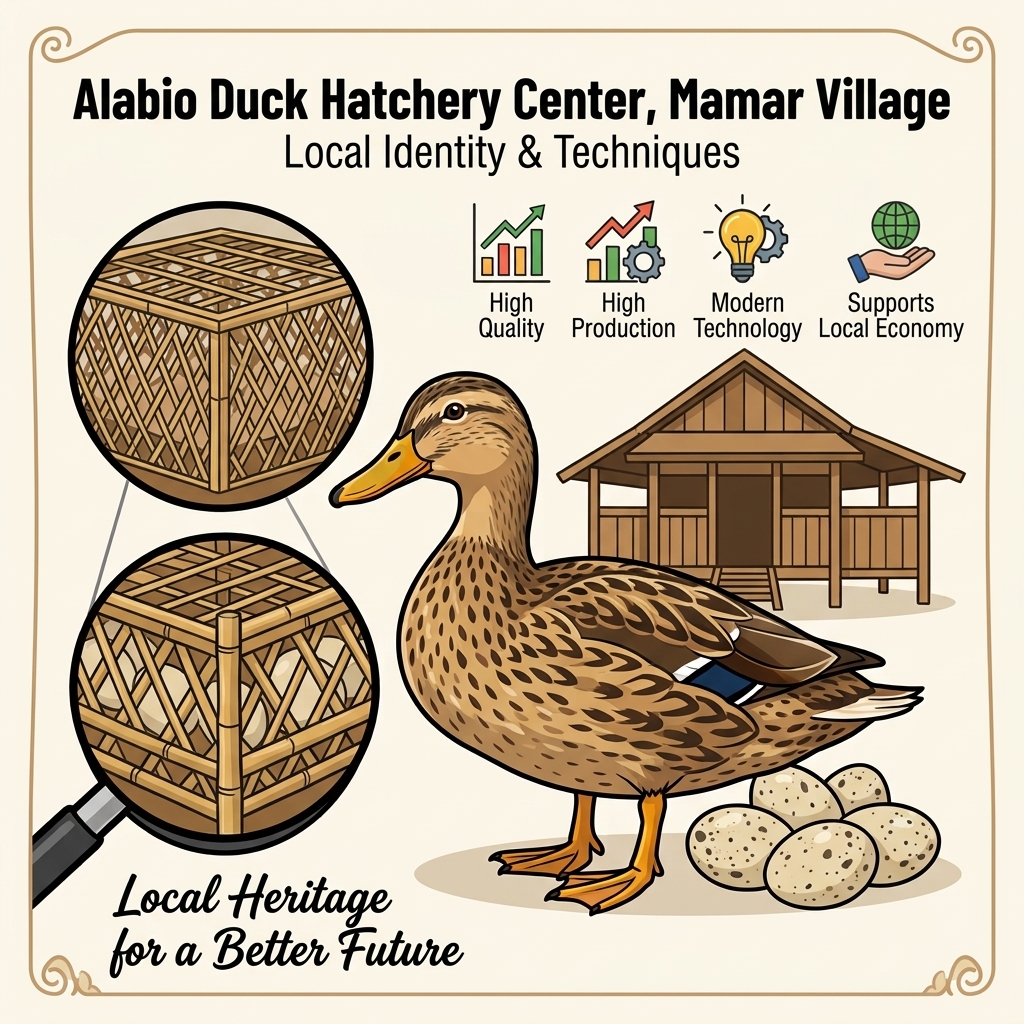
History of Duck Hatching in Mamar Village
Early History and Difficult Times
Mamar Village has been established since the era of the independence struggle. Following independence of Indonesia, the village experienced extreme poverty, which triggered the migration of its residents to other areas in search of a better livelihood. At that time, most of the community relied solely on the agricultural and fisheries sectors, whose yields were insufficient to meet daily basic needs.
Beginnings of Duck Farming and Development of Hatching Methods
As an effort to boost the local economy, around 1963, the people of Mamar Village began pioneering duck farming enterprises. Initially, the egg hatching method was carried out naturally using Muscovy duck brooding, which persisted until 1979. Entering 1980, duck farmers transitioned to the bronjong (bamboo basket incubation) hatching system adopted from Bali. Koperasi Sekawan, local village farmer association, even invited a trainer from Bali, Mr. Made, to train the local community.
Struggle, Success, and Government Appreciation
The adoption process of this new technology was not easy. Many farmers suffered financial losses and were forced to sell their personal belongings. However, thanks to their resilience and unyielding spirit, the community eventually mastered the technique. This success brought a significant positive impact: the local economy surged, enabling families to fund their children’s education up to the university level and driving infrastructure improvements on the road from Amuntai to South Amuntai District. This achievement even attracted the attention of the Central Government, marked by official working visits from Vice President Adam Malik in 1981/1982 and Minister of Information, Harmoko.
Modernization with a Combination System
Entering the 1990s, innovation continued to evolve. A Field Agricultural Extension Officer (PPL) named Khairun Nasirin designed a simple hatcher machine to improve time, labor, and production capacity efficiency without eliminating the crucial stages of the bronjong system. The implementation of this combined system—integrating modern incubator machines with bronjong—is what Mamar Village farmers continue to maintain to this day.
DUCK HATCHERY PRODUCTION STATISTIC IN MAMAR VILLAGE
The current number of hatchery farmers in Mamar Village is approximately 46 individuals, with total cumulative Day-Old Duck (DOD) production capacity approximately around 100,000 birds per week with statistics given below:
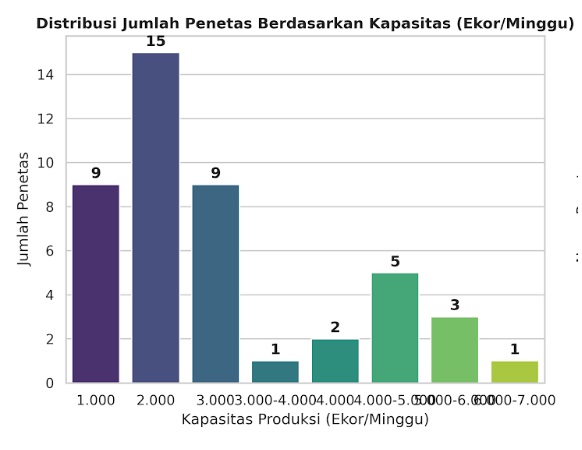
Graph 1. Distribution of the Number of Hatchery Farmers by Capacity (Birds/Week)
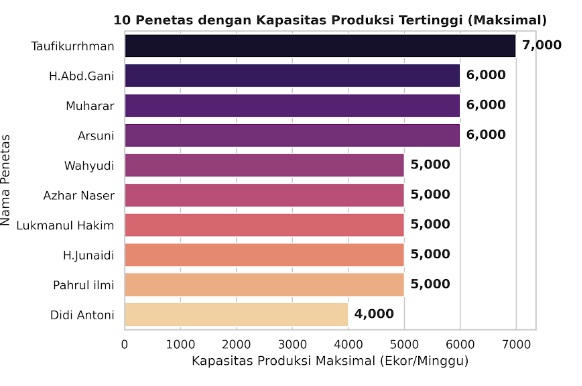
Graph 2. Top 10 Hatchery Farmers by Highest (Maximum) Production Capacity
Local Wisdom of Alabio Duck Hatching in Mamar Village
1. Hatching Egg Selection
- Select eggs from healthy and productive Alabio female ducks.
- Choose medium-sized eggs (neither too large nor too small).
- Symmetrical oval egg shape (neither overly elongated nor excessively round).
- The eggshells tend to be thin. Farmers typically test shell quality by tapping them:
• Pitch Indicator: A sound that is too low or overly high-pitched indicates the egg is unsuitable for hatching.
• Optimal Quality: A medium-frequency sound indicates good quality and readiness for hatching.
- Maximum storage time for eggs before being placed into the incubator is 7 days.
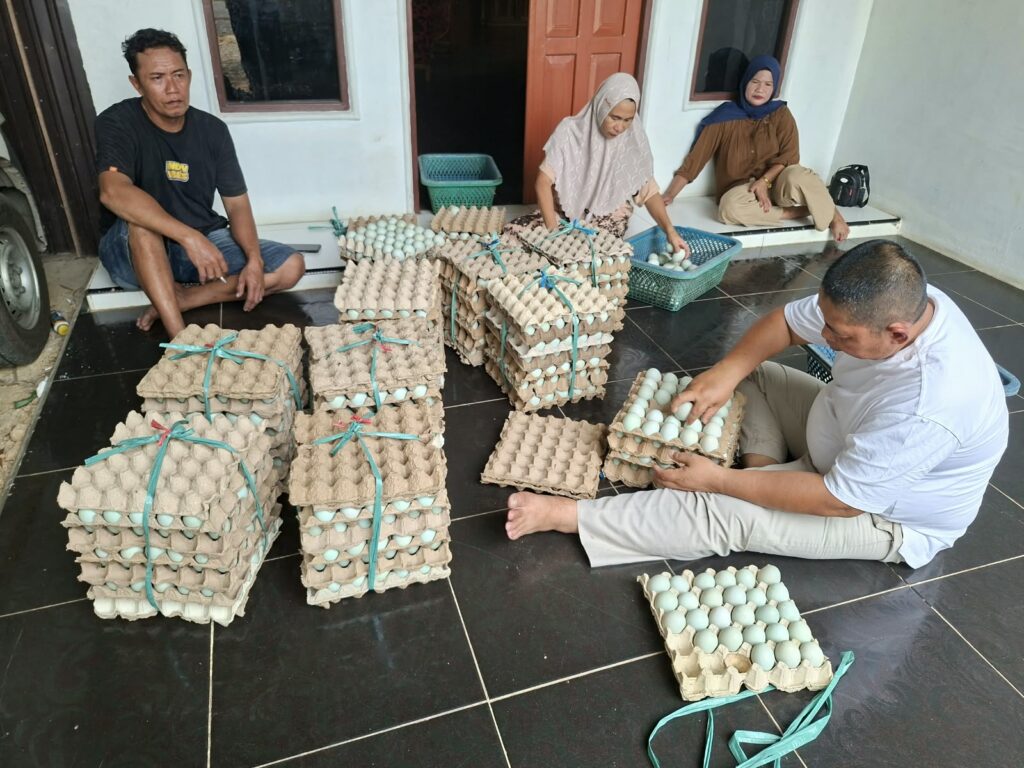
Figure 1. Egg sorting prior to loading into the incubator.
2. Loading Eggs into the Incubator
Before inserting the eggs, the incubator temperature is pre-adjusted within the range of 38–39 °C (approximately 101–102 °F).
3. Egg Turning
Eggs inside the incubator are turned periodically, around 2 to 3 times a day.
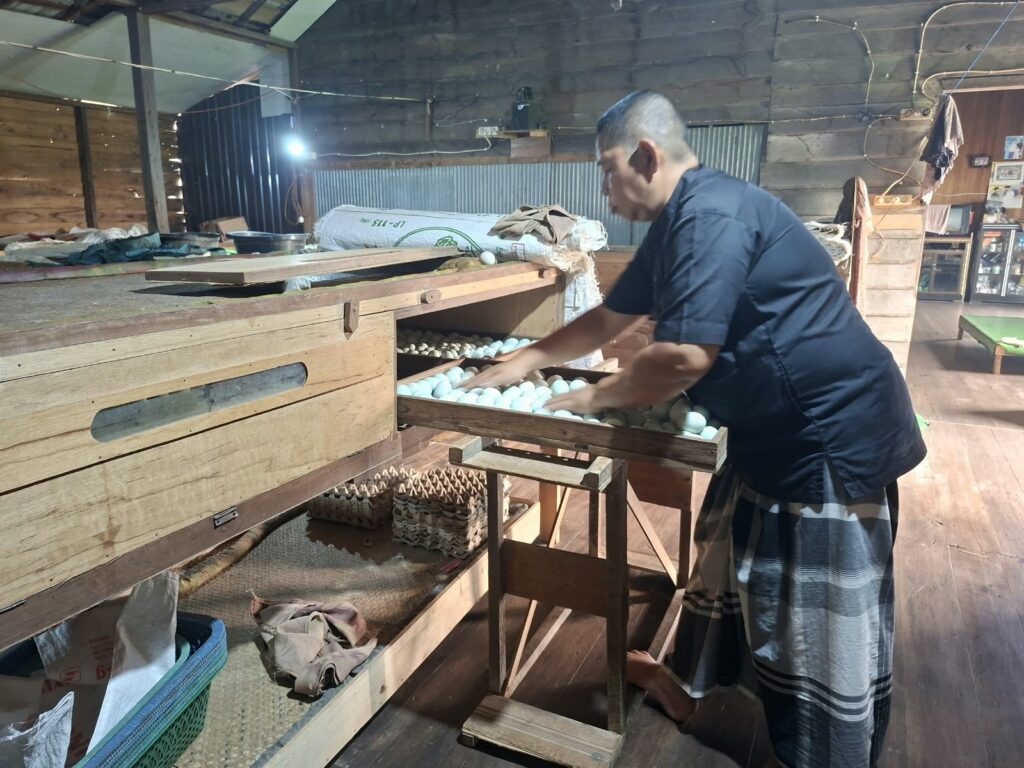
Figure 2. Egg turning inside the incubator.
4. Candling (Egg Inspection)
The candling process is conducted when eggs reach 5–7 days inside the incubator. This stage aims to:
- Separate fertile (fertilized) eggs from infertile (unfertilized) eggs.
- Identify fertilized eggs where the embryo has died.
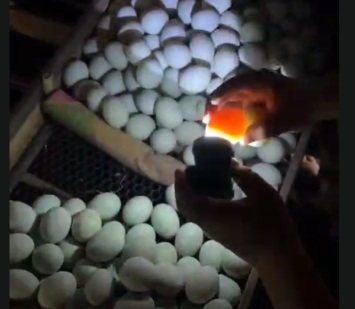
Figure 3. Egg candling process.
5. Transferring Eggs to the Upper Section of the Incubator
After spending 1 to 2 weeks inside the machine, Mamar Village farmers transfer the eggs to the upper outer platform of the incubator. This practice optimizes the machine’s production capacity while utilizing residual heat emitting from the lower incubator.
- Eggs on top of the machine continue to be turned at least twice daily.
- The eggs are covered with 12–15 layers of thick cloth to maintain stable temperature.
6. Transferring Eggs from Upper Incubator to Hatching Platforms (Balai-Balai)
After remaining on top of the incubator for 1 week, eggs are moved to open hatching platforms (balai-balai) as the final phase of the incubation process.
- Eggs on the platforms are turned 2–3 times a day.
- During each turning, farmers wipe the eggs with a moist cloth to maintain proper humidity.
- Eggs are covered with 1–3 layers of cloth depending on room temperature; the cloth is replaced with a thinner layer once eggshells begin to crack.
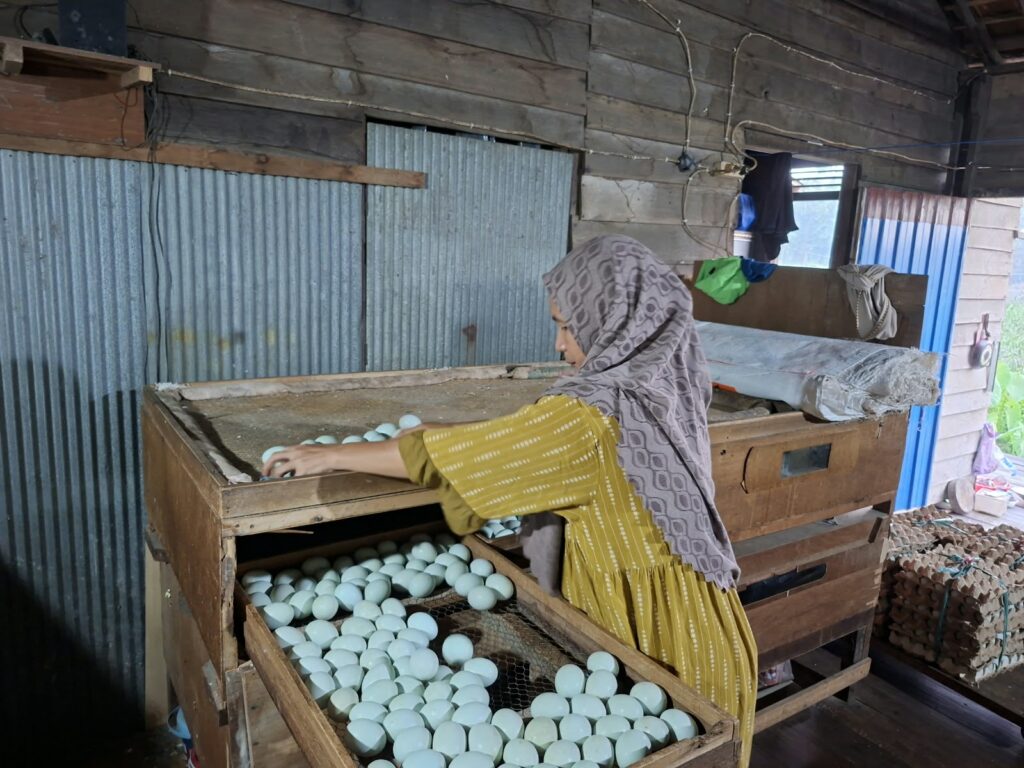
Figure 4. Transferring eggs from the incubator to the hatching platform located on top of the machine
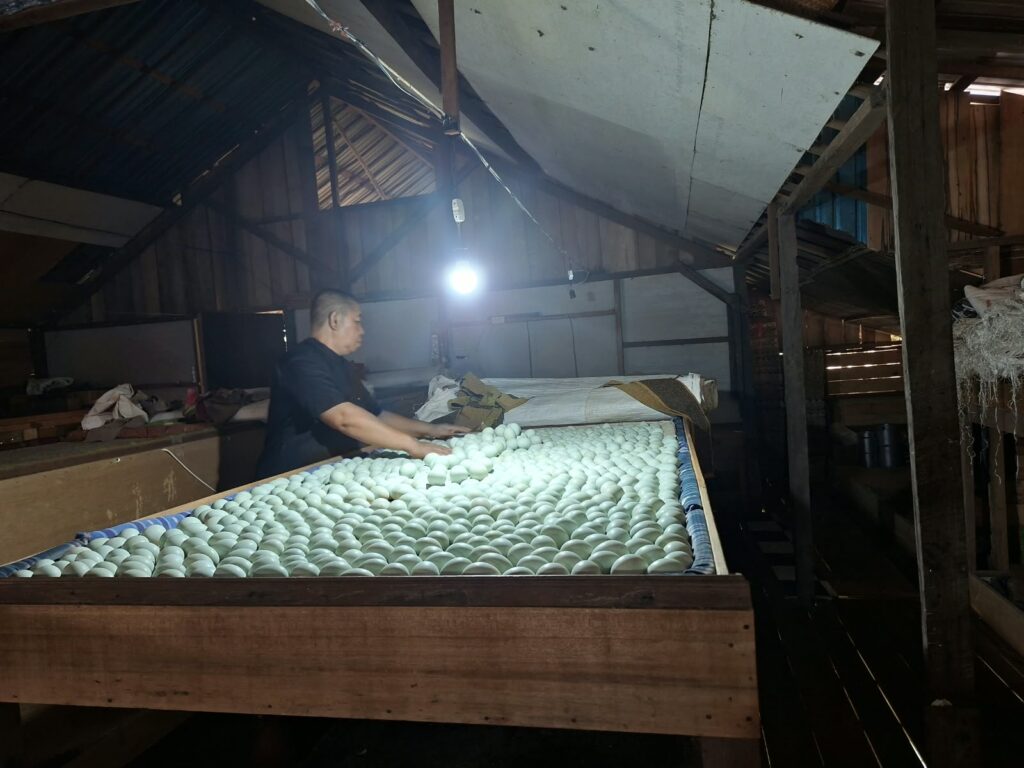
Figure 5. Egg turning on the hatching platform
7. Sexing DOD (Day-Old Ducks)
After ducklings (DOD) hatch and their down feathers dry, farmers perform sex identification (male vs. female) based on the following characteristics:
- • Beak Color: A dull-colored beak indicates a male, whereas a bright/clear beak indicates a female.
- • Beak Movement: Female beak movements tend to be faster, while male movements are slower.
- • Voice (Primary Indicator): A loud/high-pitched sound indicates a female, whereas a raspy/hoarse sound indicates a male.
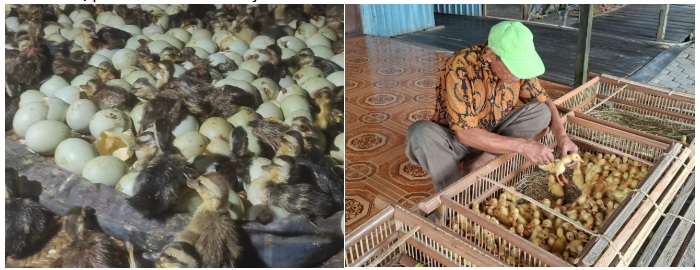
Figure 6. Hatched ducklings on the hatching platform and the sexing process.
8. Hatchability Data and DOD Weight
- Hatchability Rate: Average hatchability reaches 60–70% of total eggs incubated.
- DOD Weight: Ranges between 50–60 grams per bird.
Resource Person / Informant:
Arsuni
Duck Seed Hatchery Entrepreneur & Breeder
Chairman of the “MANDIRI” Livestock Farmers Group, Mamar Village
Drafting Team / Prepared by:
Animal Health and Veterinary Public Health Division
Livestock Services Division
Department of Agriculture, Hulu Sungai Utara Regency
2026